 Trove
Group chat
Anyone free to look at the tap?
For ADHD founders with too many projects. Built by one.
Say it out loud. Trove turns it into one list, with the work that matters on top. Every project goes to the people waiting on it. And there’s finally room for the rest of your life.
The 14-day promise: still opening Trove on day 14, or delete it. You’ve lost ten minutes.
Free to start. In the browser and on iPhone.
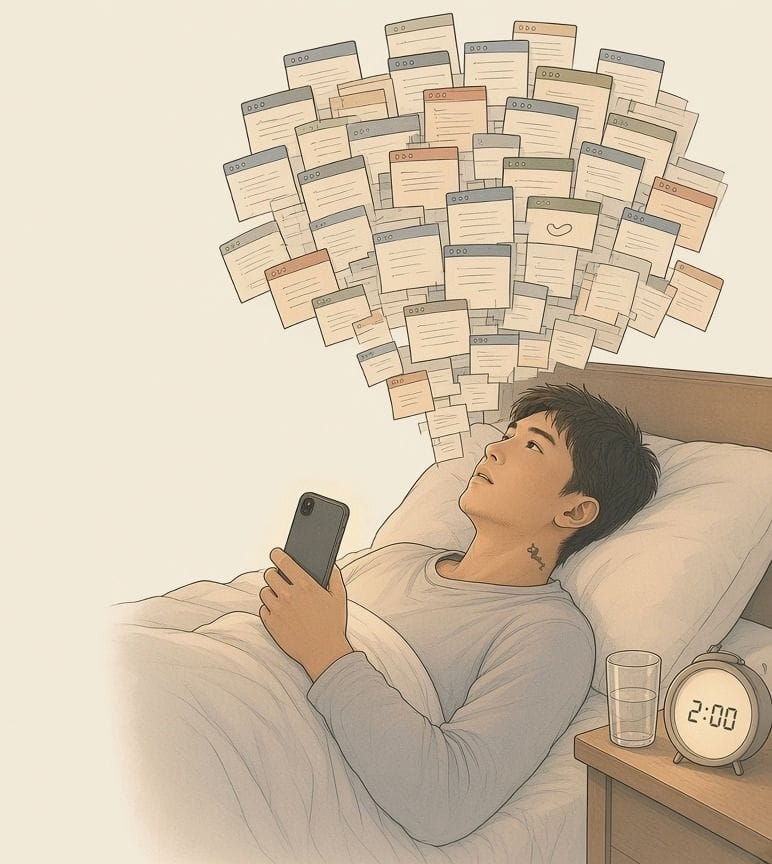
Sound familiar?
The proposal you promised Tuesday. The side project you started Sunday. The tap that’s still dripping. Friday at the hall. The call to your mum you meant to make last week.
So you lie there. Running the list. Again.
Then morning comes, and you start something new instead.
In their words, from ADHD founders on Reddit
“47 things bouncing around in my head… no idea what actually matters.”
“Week 4: abandon project. Start something new. Rinse. Repeat. Forever.”
“I go back to a sticky note on my desk.”
After two weeks of the perfect system.
And it’s costing you
The Notion system you spent a whole weekend building. Abandoned by week three.
The to-do app with 63 overdue tasks. You don’t open it any more. You can’t face it.
The people waiting on you. The builder. The volunteer. Your partner. Still waiting.
And the one project that could change everything? Still 80% done.
It isn’t a willpower problem. You’ve got drive to spare. You’ve just got nowhere to put it.

The research
Trove is built around what the studies on adult ADHD keep saying. Here’s what we read, and what each finding changed in the app.
29%
“ADHD is not a disorder of knowing what to do. It’s a disorder of doing what you know.”
Interviews with 14 founders diagnosed with ADHD found impulsivity drove them to act, and hyperfocus shaped what came next, for better and for worse. 4
In Trove The new idea goes on the list, not to the top. Line one is still the thing that matters.
Barkley’s advice is to “externalize” what you need to remember, with a physical reminder “in the setting at the point of performance”. 5
In Trove Say it out loud and it’s a line on the day it’s due, right where you’ll look.
In one study, adults with ADHD “recalled and executed less of their own real-life intentions”, and that gap was linked to procrastination. 6
In Trove Everything you meant to do lives on one list. Nothing hides in a project you forgot to open.
A meta-analysis of 55 studies found people with ADHD judge time less accurately, with errors “indicative of an accelerated internal clock”. 9
In Trove Every line has a day. Didn’t finish? It stays on its day, and tomorrow you decide.
220 neurodivergent people described body doubling as “using the presence of others to start, stay focused on, or accomplish a task”. 10
In Trove Every project gets a circle with the people in it, so someone’s always waiting on the line.
In 182 adults with ADHD, racing thoughts “increased in the evening and at bedtime”. A review of 42 studies found adults with ADHD take longer to fall asleep. 811
In Trove Write tomorrow’s first line before bed, so the list is out of your head and on the page.
Trove is a to-do list, not a medical product or a treatment. If ADHD is getting in the way of your life, talk to a doctor.
Human work, in an agentic world
AI drafts the email in seconds. Summarises the quotes. Chases the reply.
It also hands you ten new ideas before lunch. And your brain wants to start every one.
What’s left is the human work. The tap. The hire. Friday at the hall. The people waiting on you.
That needs a home built for a person, not another system to maintain. That’s Trove.
What actually gets finished
ADHD coaches say it again and again. Willpower doesn’t finish projects. Deadlines and people do.
So every project in Trove gets a circle. The house, with whoever lives there. The business, with the person in it with you. The community, with the people who put the night on.
Put a name on a line. It leaves your head. It leaves your list. Someone’s waiting, so it moves.
Circles are shared. Your list is yours.
It isn’t you
It’s not your brain. It’s what you’ve been handed.
Researchers who interviewed 22 adults with ADHD say today’s productivity tools “often assume consistent self-regulation and linear time”. 7

You build a Life OS. Then you maintain it. Then the system is the job. Trove has nothing to build.
Made for software teams. Sprints for your house? Tickets for your mum? And your people will never join a Linear project.
Beautiful for 14 days. Then into the drawer with the other six.
Miss one day, get a red wall. Miss three, stop opening it. In Trove, yesterday stays in yesterday.
Kind. Calm. Built for one. Nobody else is in there, so nobody’s waiting.
Brilliant at busywork. Not a place to keep a life.
Trove isn’t a bigger system. It’s a smaller one, with people in it.
How it works
Tap the mic. Talk. Trove writes the task, with notes and a date if you said one.
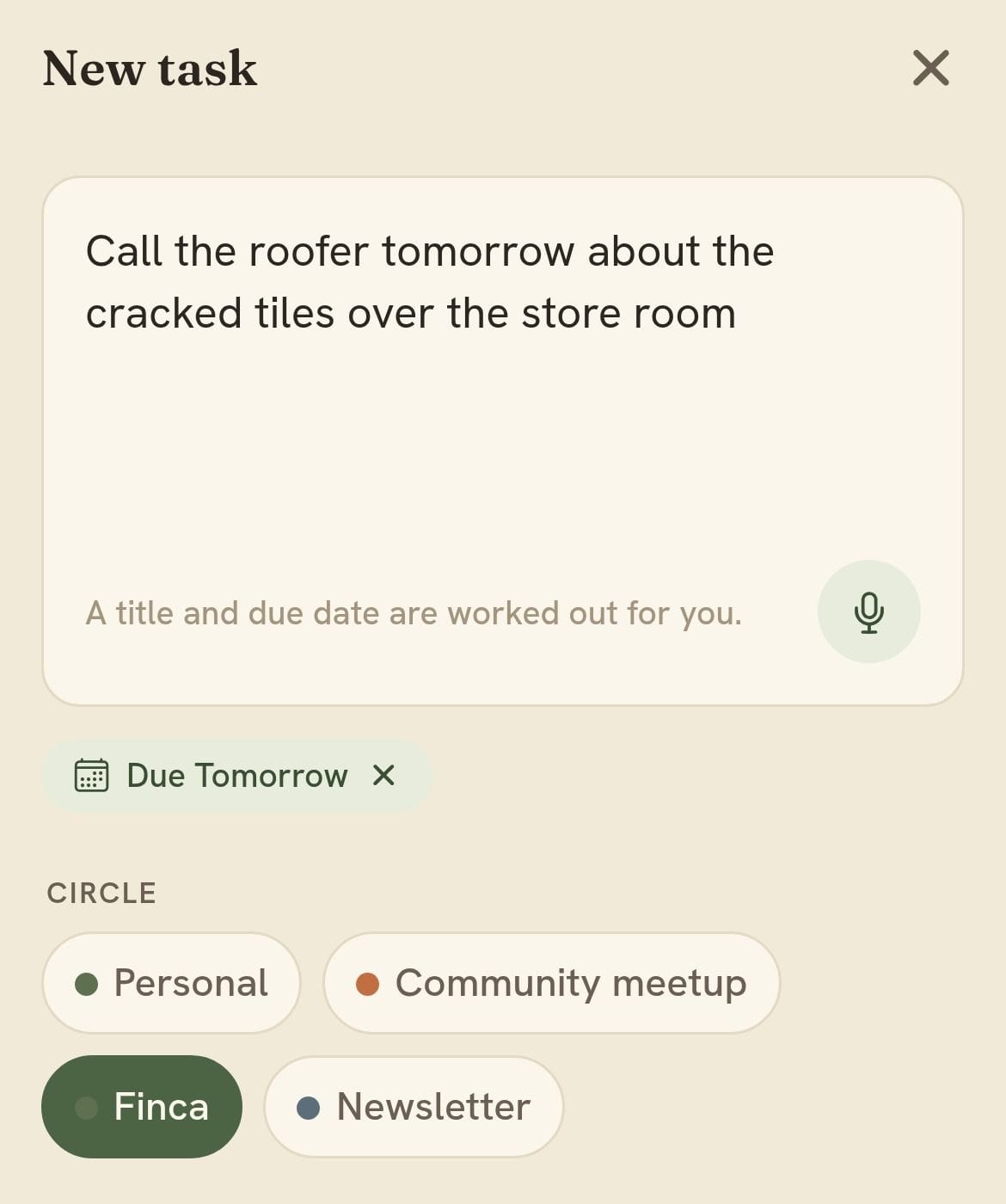
Send the people in it a link. No training. No per-person cost.
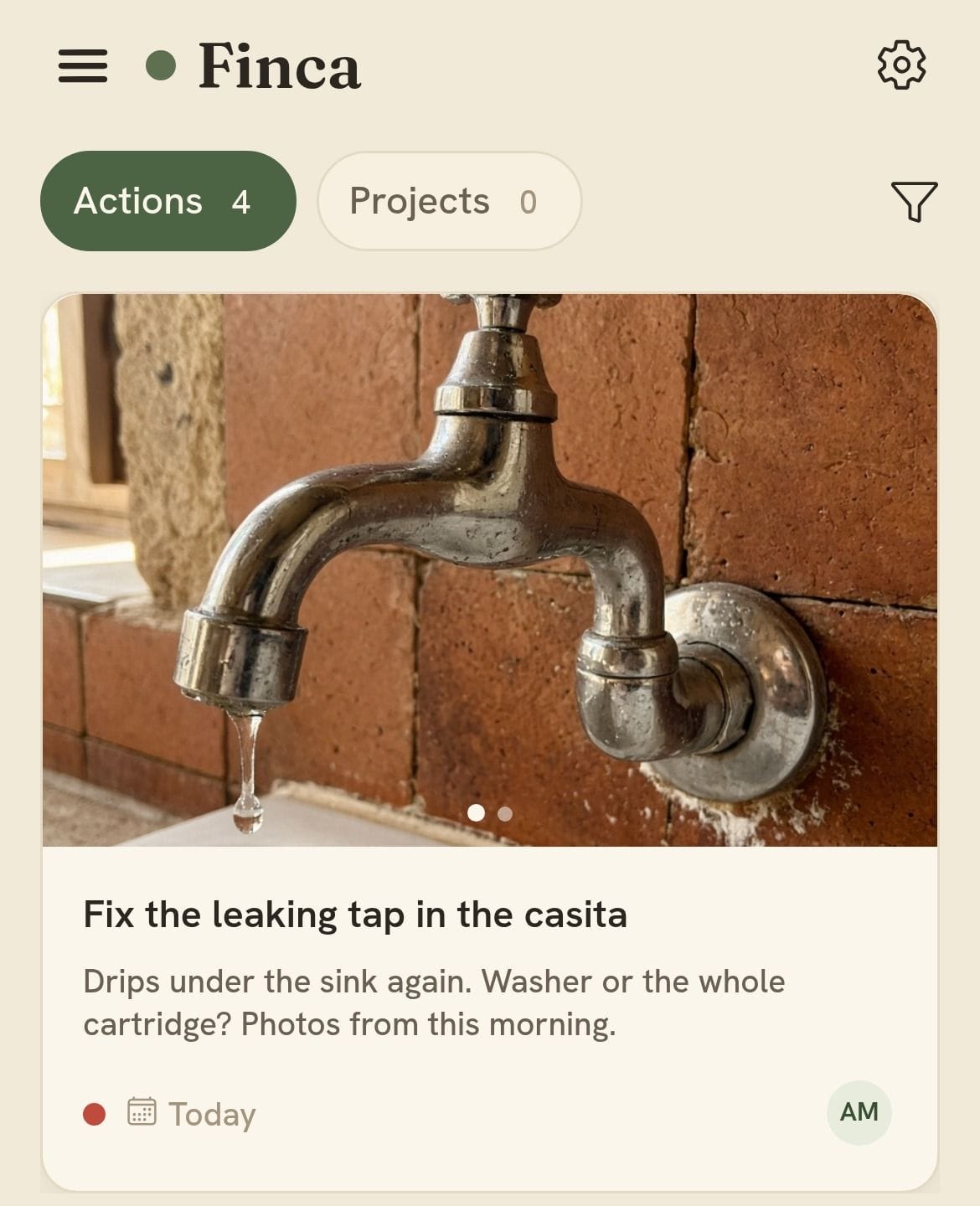
Today pulls in what’s yours from every circle. Start at the top. Tick. Next.
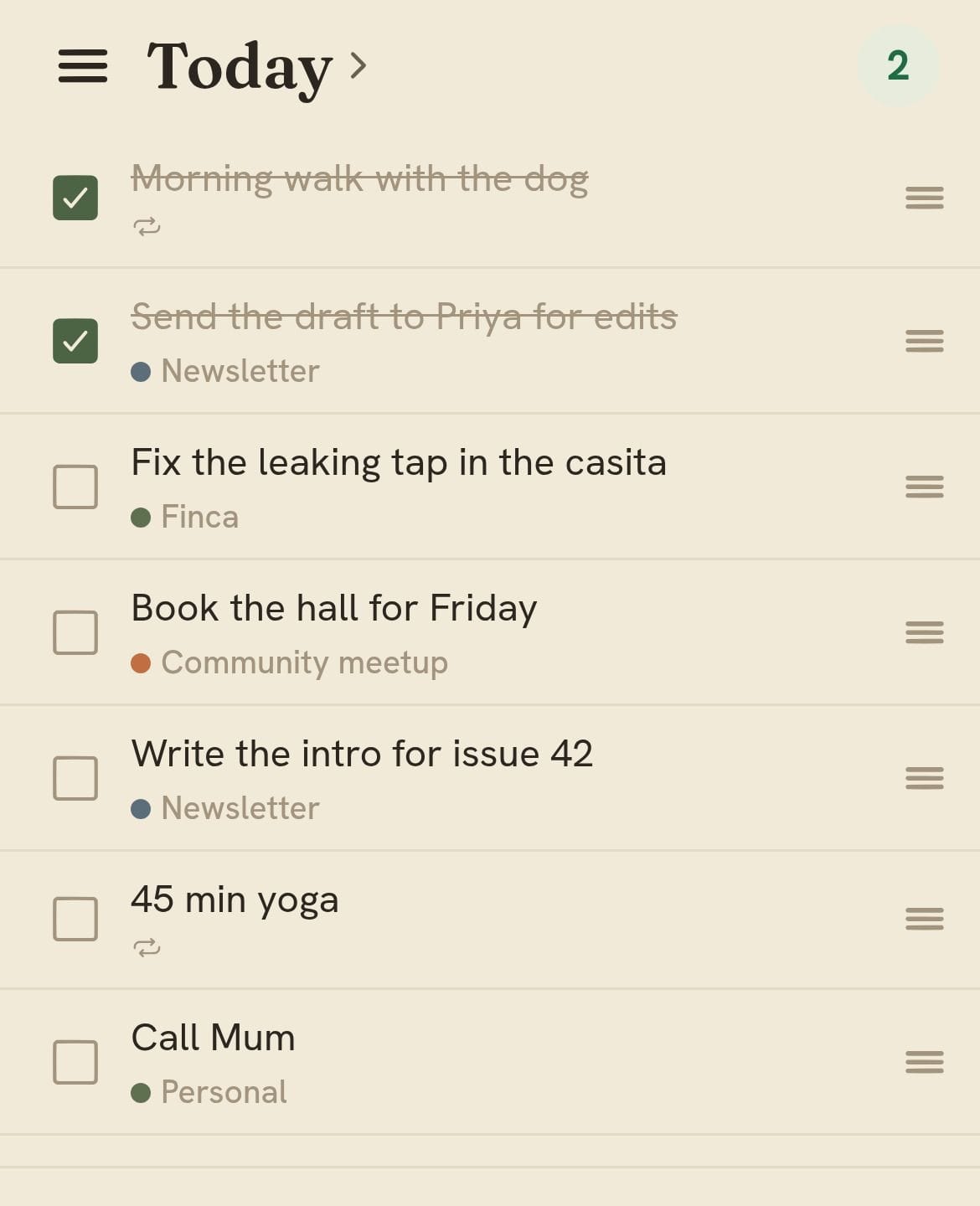
One list, top to bottom
A list with no top makes you choose. And the hard thing always loses.
In Trove, the next thing is line one. Something urgent? Drag it up. Work down again.
Didn’t finish? It stays on its day. Tomorrow you glance back and decide: bring it, or let it go. No red wall. No snowball of shame.
Write tomorrow’s first line tonight. Close the laptop. Sleep. 8
Yesterday · glance back
Today
Tomorrow · written tonight
Tick a line, or push one higher. That’s the whole system.
The tap moved above the invoice when the roofer rang. By evening it was done, and the invoice was next. Swipe between yesterday, today and tomorrow.

Not just the business
You’re not just a founder. You’re the house. The family. The 45 minutes of yoga. The friend who said they’d ring.
Put them on the same list as the business, so they stop losing every single time.
Agents, where they earn a place
Connect Claude, ChatGPT, Cursor or Grok. Hand it a line, like “summarise the roof quotes”. It stays in the circle. It doesn’t take over your day.
You first. Then your people. Then an agent, where it earns its place.
Why I built Trove
“I’ve used Notion for almost a decade. I’ve spent several hundred hours in it, and I built my Life OS there. I’ve used every planning system going, from the Productivity Planner to the bullet journal. With some, you end up maintaining the system more than actually getting things done. Some are better, but they don’t quite capture an ambitious entrepreneur with ADHD.
I’ve got light ADHD, so much going on, and so much I want to build. I didn’t want Jira or Linear for my life. And the people in my life were never going to join a Linear project. So I built Trove.”
The 14-day promise
So here’s the deal. Give Trove ten minutes tonight. Use it for 14 days.
Still opening it on day 14? It’s working. Not? Delete it. You’ve lost ten minutes.
Free to start: your Personal circle plus 3 more. Trove Pro is $9.99 a month or $79.99 a year, with a 14-day free trial.
Start freeBefore you open it
No. Trove is a to-do and project app, not a medical product. It doesn’t treat ADHD. It’s built by someone with ADHD, around the things that trip us up. If ADHD is getting in the way of work or life, talk to your GP or a clinician.
No. Too much going on and other people involved? It’s for you.
Then delete it. That’s the 14-day promise.
They stay on their day. A quick look at yesterday lets you bring them forward or let them go. Missed routines just lapse. No overdue counter.
They tap a link, land in the right circle and see what’s theirs. That’s it. No per-person cost.
Free to start. You get your Personal circle plus 3 circles, and you can invite as many people as you like. They never pay. Trove Pro adds unlimited circles, Insights on where your week went, room for more than 15 things on Today, and agents: $9.99 a month or $79.99 a year, with a 14-day free trial. You subscribe in the iPhone app, and Pro works on the web too.
In the browser and on iPhone.
Yes, with Trove Pro. You can assign a bot through Trove’s MCP, after the people. The docs show how to connect one.

Tonight
Ten minutes to empty your head. 14 days to see if it sticks. If it doesn’t, delete it.
Free to start. Web and iPhone.